



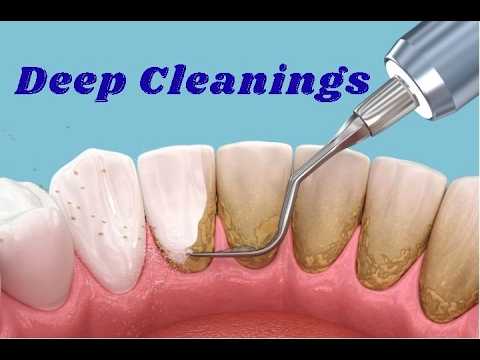
Many patients don't fully recognize the true importance of routine dental cleanings. Professional cleanings are about far more than maintaining a bright smile. They are critical to preventive care. These visits allow us to identify early signs of infection, inflammation, and gum disease before they progress into more serious conditions. Early detection enables us to intervene promptly and effectively, helping you preserve both your oral health and overall well-being.
Let's do a comprehensive overview of deep cleanings: what they are, why they are necessary, and how they play a vital role in managing and preventing periodontal disease or gum disease. I will also discuss practical steps you can take to maintain healthy gums and reduce your risk in the future.
What is a Dental Cleaning?
A dental cleaning is simply the removal of the hard and soft deposits above the gum line. If it's above the gum line, either plaque or calculus, that is part of your routine dental cleaning. Unfortunately, if we do not remove those deposits that are above your gum line, they will progress and eventually go below your gum line.
Once they go below the gum line, it's no longer called a regular cleaning. Now, you need something called a deep cleaning. It's called deep because we go under your gum.
Why is a Deep Cleaning Important?
The problem with not removing tartar debris that's under the gum is that your gum is like the gasket that keeps all the bacteria from your mouth away from the internal structures of your body. Our mouth is open to the air. We eat food. We put things in our mouth maybe we shouldn't. All this bacteria stays in your mouth. The gum is the gasket that keeps it out of your blood system.
Once it goes into your blood system, it can affect your entire system. You can have things like heart attacks and strokes. All this is closely related to dental disease, specifically gum disease. You want to do your best at keeping all disease above your gum line. Once you go below your gum line, you are getting into systemic conditions that could affect overall well-being.
What are the Signs of Gum Disease?
One of the first signs we look at when someone comes in as a new patient is bleeding. We have a little probe that measures bone loss. It's basically how thick your gum is. We want that number to be three or less. Three or less with bleeding means you have inflammation. When your gums are inflamed, that is called gingivitis. Gingivitis is very important to treat before it progresses and starts attacking the bone.
Once it attacks the bone, it's called periodontitis or gum disease. Remember, the first sign and symptom you want to look for and treat aggressively is gingivitis. It's our job as healthcare providers to make sure your gingivitis is cared for and no longer present in your mouth. If we can do that, you will not have gum disease.
When Do You Need a Deep Dental Cleaning?
One of the things that tells us if you need a deep cleaning is, number one, bleeding. Bleeding when you're at home brushing your teeth and flossing.
Number two, when we look at dental X-rays or maybe feel with the dental tools that there is tartar or deposits under your gum, that absolutely has to be removed, and it has to be removed very effectively and very quickly. Do not delay if you have tartar and debris under your gum; that really needs to be aggressively treated. Bad breath is an important sign that you need to pay attention to. A lot of things cause bad breath, but gum disease is one of them.
Another thing is painful gums, loose teeth, and just a dull sense of ache in your mouth. If you have these signs, for the most part, your disease is pretty advanced. Remember, gum disease is a painless disease until it's too late. When it's too late, that means tooth removal. No one likes to have dirty teeth.
What Happens During a Deep Cleaning?
If your dentist says you need a deep cleaning, there are several things that we do.
Number one, we have to numb. Once you're comfortable enough, we have special tools that remove the tartar and the debris that is below your gum line. Unfortunately, these are bacteria, and bacteria, as you all know, are microscopic organisms. Just because we get the big chunks out of there, it doesn't necessarily mean we have removed all the bacteria from in there. There are some things we can do to help us help you remove the bacteria. There are some irrigation chemicals that we use. There are some antibiotics you can place under your tongue. The best, obviously, is if you can remove just about all of them.
For that, we have nowadays lasers. A dental laser can go into your infected gum pocket and pretty much sterilize the pocket, removing most, if not all, of the bacteria. It is important when you do get a deep clean to have some medic, either antibiotics or some sort of cleanser irrigation for spots out there. Once that's done, it is important to have a laser put in those pockets to help sterilize it as much as possible. Once that is done, we send you home with care.
Deep Dental Cleanings at Riverside Center for Esthetic Dentistry
Dr. Jacobs will only perform scaling and root planing after a thorough examination of the mouth, which may include taking x-rays and visually examining the mouth. Depending on the condition of the gums, the amount of tartar present, the depth of the pockets, and the progression of periodontitis, Dr. Jacobs may recommend scaling and root planing. In some cases, a local anesthesia may be used during the procedure.
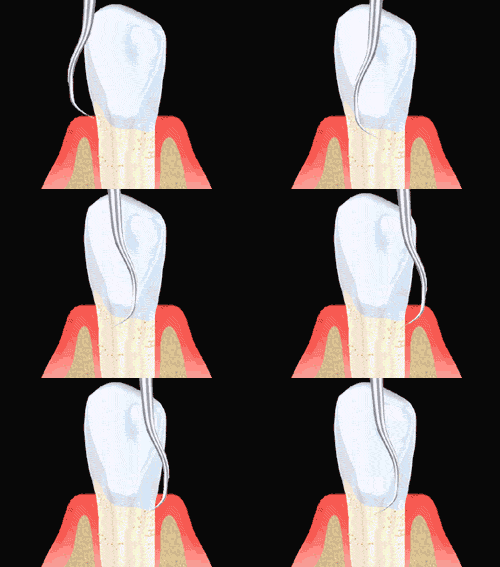
Scaling:
When scaling is performed, calculus and plaque that attaches to the tooth surfaces is removed. The process especially targets the area below the gum line, along the root. Scaling is performed with a special dental tool called an ultrasonic scaling tool. The scaling tool usually includes an irrigation process that can be used to deliver an antimicrobial agent below the gums to help reduce oral bacteria.
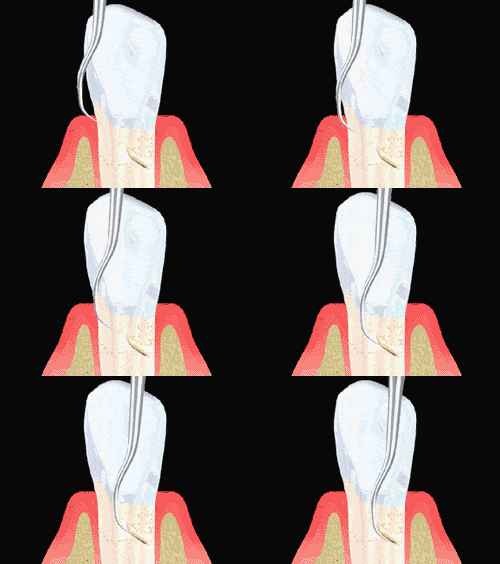
Root Planing:
Root planing is performed in order to remove cementum and surface dentin that is embedded with unwanted microorganisms, toxins and tartar. The root of the tooth is literally smoothed, which promotes healing, and also helps prevent bacteria from easily colonizing in the future.
Antibiotics or irrigation with anti-microbials (chemical agents or mouth rinses) may be recommended to help control the growth of bacteria that create toxins and cause periodontitis. In some cases, Dr. Jacobs may place antibiotic fibers in the periodontal pockets after scaling and planing. This may be done to control infection and to encourage normal healing.
When deep pockets between teeth and gums are present, it is difficult for Dr. Jacobs to thoroughly remove plaque and tartar. Patients can seldom, if ever, keep these pockets clean and free of plaque. Consequently, surgery may be needed to restore periodontal health.
What is the Follow-Up Care After a Deep Cleaning?
The most important thing you need to realize is that we cannot be with you 24 hours a day. We provide and give a fresh starting point where there are no deposits under your gum. Ultimately, if you don't brush, floss, and go see your dentist every three months, these deposits do come back. If they do come back, it needs to be treated again, regardless of how long it's been, maybe one, two, three years or more. If they do come back, they need to be addressed.
Another thing is that once you see the deposits on an X-ray, there's a lot in there. Most of the time, there are deposits in there that you cannot see on the X-ray. We know they're in there because we see them with our magnification loops. We can actually blow air and look and see the tartar, but you look on the X-ray, and you don't see it because there has to be a lot of tartar in the image on an X-ray. It is important to treat it even though you may not see it on the X-ray. If you do see it on an X-ray, there's a lot there.
What are the Benefits of a Deep Cleaning?
One of the benefits of deep cleaning is the inflammation process has been removed. Inflammation is dangerous to your health, especially chronic long-lasting inflammation or hormones that get released by your body that are detrimental to your health. We want to stop and make sure that inflammation is no longer there.
Once the inflammation is gone, it's basically a sign that your body has healed itself. Keep in mind, though, that for the most part, bone that is lost tends to be lost forever. We do have some procedures where we can graft bone, but they're only for certain types of defects that exist under your gum in the bone. Some can be grafted, not all. Keep in mind, the best policy is not to lose any bone. It is expensive and difficult to graft. So pay close attention to your oral hygiene.
What are the Side Effects of a Deep Cleaning?
One of the side effects after you do get your deep cleaning is obviously a little tenderness. Tenderness is normal. Tooth sensitivity is normal too. It's not that we've done anything wrong. It's just that your teeth have had all this coat of gunk on them. We remove that coat of gunk. Your teeth do get sensitive. But keep in mind it's temporary. Nothing that a little motion or tunnel can help you with for a day or two.
Sometimes patients notice gaps in their teeth after deep cleaning. It's not that we have cut their gums off or in some way injured their teeth. That's not it at all. What has happened is that the tartar has built up on your teeth and it has literally pushed your gum away from the tooth. When we do remove that tartar, what you're seeing is your gum the way it was. The only thing you don't see is the tartar. If you do see gaps and spaces in your teeth after the deep cleaning, it's not that we gave those to you. It's the tartar and debris that was there that gave it to you. We're just removing the tartar and debris. It is an optical illusion, but it is important to keep aware of what's going on there.
What Results Can You Expect from a Deep Cleaning?
The most important result you can expect from a deep clean, like I said earlier, is the removal of inflammation. Once the inflammation goes away, the disease process stops, meaning you don't get any more bone loss or tooth mobility. That is what we're trying to achieve: the inflammation process to go away.
In closing, maintaining consistent dental cleanings is one of the most important investments you can make in your long-term health. Preventive dental care allows us to stay ahead of problems rather than react to them after they progress. Deep cleanings, when recommended, are not something to fear. They are proactive steps towards stopping gum disease in its tracks and restoring your health to your gums.
With early intervention, proper treatment, and consistent home care, periodontal disease can be effectively managed and controlled. My goal is to always help you preserve your natural teeth, protect your overall health, and ensure you feel confident in your smile.
Your dental health matters to us, and we’re here to support you every step of the way. If you’re looking for expert dental care near Riverside, CA, call (951) 904-3164 or email [email protected] to learn more. Ready to get started? Schedule your appointment below.