



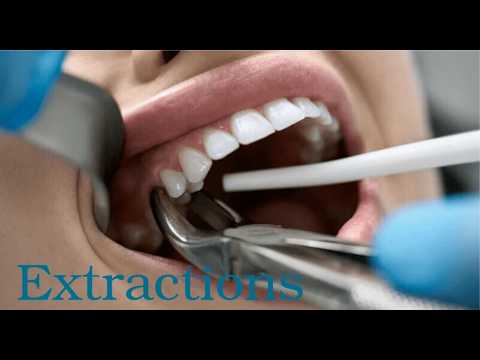
What is a dental extraction
A dental extraction is simply the removal of a tooth. A tooth is a body part, and it is, in fact, surgery when we are removing your tooth.
Why might a tooth need to be extracted?
Teeth can sometimes need to be extracted for many reasons. The main reason is that a tooth has damage, like a cavity, an infection in the bone, or other issues, and the tooth cannot be restored to a healthy structure, so it must be removed.
Sometimes we remove teeth for orthodontic reasons, meaning there is so much crowding that we need to remove one in order to create room to straighten the teeth. Wisdom teeth are another reason. Our bodies, as human beings, have changed over the years. Our jaws are shrinking because of the diet we have, and therefore the teeth do not have enough room to come in.
What anesthetic and sedation options are available during a tooth extraction?
There are many anesthetic options during a tooth extraction. Ninety-nine percent of the time, we numb you, you are awake, and we simply remove the tooth. Tooth extractions have become much easier than in the past. There are a lot of instruments. My favorite lately is something called the Piezotome, which will very quickly and efficiently remove bone around your tooth without the sound of the drill. It's a small vibration, and the tooth comes out very easily.
We also have the option of sedating you. There are two forms of sedation. One is oral conscious sedation, meaning you're awake but sedated. It's kind of like being drunk. We give you some pills, you're comfortably sedated, we remove the tooth, and it's done. For more extensive procedures, when we have to remove multiple teeth, such as four wisdom teeth, we do have the option of starting an IV, putting you to sleep, removing the teeth, and then waking you up. These are all options, and they're all available to you with the proper medical clearance.
What is a dry socket?
Sometimes people ask if they're going to get a dry socket. A dry socket is very simply when a tooth is removed and a blood clot forms. That blood clot is alive. It has cells in it that start the healing process immediately. The cells create bone. They create gum. Everything that is needed is formed from that clot of blood.
Sometimes, through cigarette smoking, the high heat of cigarettes will actually kill the cells. There's a lot of heat in the cigarette, and it literally just cooks the cells. The cells are dead. They're still a clot, but they're dead. They don't have the ability to create gum or bone. That clot falls out, and now you have exposed bone, basically a hole with no clot, and that can be painful. Other things can also cause dry sockets, including infections and other factors, and sometimes we just don't know why. But basically, the gist of it is that it is slow healing. It takes a long time for that to heal, but it eventually does heal.
Why is bone grafting important after a tooth removal?
The best and greatest invention lately, in my mind, is what we can do after a tooth removal. What happens to the body? Unfortunately, bone needs a stimulus to stay in place. We all know that as we get older, if we don't walk, lift weights, or exercise, osteoporosis, or thinning of the bone, occurs and the bone gets brittle. It can break. We basically lose bone mass.
That's a big problem in dentistry. When we remove teeth, studies show half of the bone goes away, and you get a defect in your gum. It's a big problem. What we want to do, and what you just about always need to do, is place a bone graft after a tooth is removed. Bone graft does not grow bone. When a tooth is removed, there is a race between bone growing and gum growing. Gum grows faster than bone. So if you need bone, you may not have enough bone.
What we do is place bone graft, which is basically bone mineral, in the hole and put a membrane over it. All it does is keep the gum out so that you can grow your own bone. That's all bone graft is. Your body eats it away and makes it go away. It just keeps the gum out of the way so you can grow your own bone. If you bone graft after removing the tooth, you only lose very little, like 10% of the bone. But if you go one step further and within six months place a dental implant there, that implant now stimulates this new bone that has formed, and you will retain just about all your bone. So it is very important after a tooth is removed to graft it, and maybe even more important to put a dental implant in there. That, I think, is one of the greatest inventions of modern-day dentistry.
What is the healing process after a tooth extraction?
The healing process is very quick. Within a week, most of the socket, or the hole that was there, is filled in with bone or gum. Hopefully, it's bone because we did a bone graft. That bone graft is soft, and it takes up to six months for you to grow your own bone. Somewhere around month four, if you're a healthy individual, a dental implant can be placed. So it's anywhere between four and six months after the tooth was removed that you can have your dental implant placed.
How should you care for the site after a tooth is removed?
Once your tooth is removed and hopefully it's been grafted and a bone graft placed, the recovery phase starts. You basically treat it like any other wound. Be careful. Don't irritate it or traumatize it by eating certain foods like tortilla chips. You want to keep it nice and clean. Even though you may not be able to brush that wound, you need to keep the rest of your mouth healthy and clean. Brush and floss, and just be careful at the site. You'll probably have some stitches in there. Sometimes they dissolve, sometimes they don't. But it's just like any other wound in your body. We need to make sure it does not get infected, and it should heal nicely.
Sometimes tooth extractions are necessary to protect your overall health and ensure a strong, healthy smile. While they may sound intimidating, with proper care and professional guidance, extractions can be straightforward and a positive part of your dental journey. Our goal is to help you feel comfortable, confident, and on the path to a healthier smile. If you're experiencing any tooth pain or are curious about whether you need a tooth removed or extracted, reach out to us at Riverside Center for Esthetic Dentistry.
Your dental health matters to us, and we’re here to support you every step of the way. If you’re looking for expert dental care near Riverside, CA, call (951) 904-3164 or email [email protected] to learn more. Ready to get started? Schedule your appointment below.