



Understanding Dental Crowns and How They Can Save Your Teeth
If you've been dealing with a damaged or weakened tooth, do not delay. It will only get worse. A crown could be the perfect solution to restore both function and confidence.
A dental crown is most often a ceramic porcelain restoration that fits over your tooth like a hat. Traditionally, dental crowns required removing part of the tooth to cover it entirely. That is old technology from 20 to 30 years ago and is no longer commonly used in today's dental care.
In modern dentistry, due to bonded dentistry and adhesives, you can have partial crowns like ceramic crowns. They're more challenging to do than regular crowns, but we try to preserve as much of your tooth as possible. With modern adhesives, we can replace the part of your tooth that is broken or damaged or has a cavity without having to repair your entire tooth. Sometimes, we don't even have to touch your tooth. For example, if you have a broken front tooth, we can laminate over your teeth without removing any of your tooth structure, and the appearance is incredible. It looks just like a modern tooth. It's amazing.
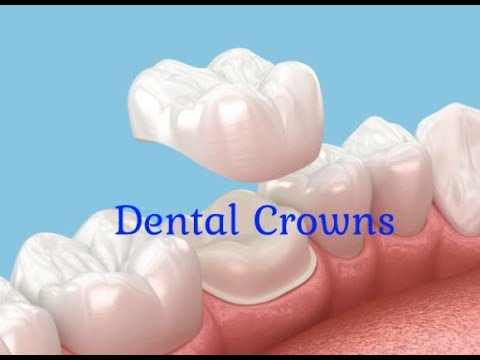
When should you consider a dental crown?
Let's pretend you have a cavity. The cavity is removed, and then the dentist has to decide whether we can fill that tooth or if it needs something stronger.
A modern filling is usually a plastic resin that replaces the missing part of your tooth. The problem with resins is that they wear. The bigger the resin, the quicker it wears; the smaller it is, the longer it lasts. Sometimes, if the resin is larger than your tooth, you may want to consider something longer-lasting. We then switch to materials like porcelain or ceramic.
Modern ceramics, like Emacs, closely mimic your natural enamel and last much longer, often going many years without needing replacement. A dental crown, once placed, will be unnoticeable within a day or two. No one will realize you have it, not even you. Sometimes, even the dentist might not notice it's a crown. You care for it just like a natural tooth: brush, floss, and visit your dentist every three to six months. That's it. Just see your dentist, brush, and floss, and your crown will last many years.
Key Benefits of Dental Crowns
- Replaces missing teeth
- Offers support to misshapen teeth or badly broken teeth
- Looks completely natural
- Fixes “smile” and functional chewing problems
What are the capabilities of crowns?
Crown and bridgework is a very reliable solution for major dental problems caused through accidents, diseases or wear and tear. Major problems can usually be corrected using these techniques. Material used in these repairs is either high-grade porcelain or porcelain bonded to gold. A higher strength of the porcelain and gold materials is recommended to treat the most serious of dental problems. Where accidental damage has occurred, resulting in lost teeth, or where teeth have broken away through excessive wear, or as the result of old fillings breaking, dental crowns and/or dental bridges can be used as a long-term solution.
Many people have unexplained pain from filled back teeth, which is usually due to hairline cracks in the chewing part of the tooth. Placing crowns on these teeth relieves the pain and allows a return of full dental function for these teeth. In front teeth, older fillings can both weaken the teeth and cause “appearance” problems due to staining or chipping. Porcelain crowns and bridges are suitable in cases where porcelain veneers are not. In teeth with root canal fillings, crowns can prevent breakage.
How long will my dental crown last?
Sometimes my patients ask me, "How long will my crown last?" The analogy is it's not up to the crown. Think of it like a car.
You can buy a brand new car in 2010. Mrs. Jones buys it and does all the necessary maintenance, like changing the oil and rotating the tires. Ten years later, the dealer tells her, "Your car is immaculate. It's worth a lot as a trade." That same day, little Johnny bought the same model and color, but never maintained it.
Ten years later, his car is in terrible condition, and the dealer tells him it's worthless. The same goes for your crown. It can last 10 to 20 years if you take care of it. However, if a patient doesn't brush, floss, or visit the dentist regularly, I'm concerned it might last only two to three years. It's about how you take care of it, and it's up to you how long it lasts.
What about decay under a crown?
One of the hardest things to detect is decay under a crown, especially the old metallic crowns. We can get hints from staining or dark discoloration, or if it feels soft, suggesting a cavity. However, metal blocks X-rays, so we can't know for sure what's underneath.
Sometimes, upon removal, it's a small cavity; other times, it's massive. Modern crowns allow for better X-ray visibility, providing hints if there's something under the crown. Still, it relies on the dentist's training, experience, and knowledge to consider all clues: appearance, X-ray, history, etc. The dentist ultimately decides if the crown needs replacement or repair.
How much do dental crowns cost?
Dental crowns vary widely in cost. It's not so much the dentist doing it, but the materials used and the quality of the crown. It's like asking how much a car costs. You can have a basic car for $25,000 or a luxury one for over $110,000.
The same applies to crowns. Are you getting a basic metallic crown that looks terrible and doesn't seal well? Or a cheaper porch crown with metal underneath? Or are you opting for a custom-stained crown made by a skilled dentist who meticulously matches your natural tooth's details? The cost depends more on the dentist's skill and the quality of the product than the crown itself. Like with cars, you get what you pay for.
Is a dental crown necessary after a root canal treatment?
In most cases, a dental crown is necessary after a root canal treatment, especially for molars. Over time, teeth can weaken after a root canal, making a crown essential to protect and reinforce the tooth.
What is involved in the dental crown procedure?
The modern dental crown procedure is straightforward. We remove the diseased or broken part of your tooth while preserving the healthy portion. The missing part is then bonded, resulting in a crown that looks just like your natural tooth. The procedure is generally painless thanks to advancements in modern dentistry.
Does the dental crown placement hurt?
No, modern dental crown placement does not hurt. Advances in dental technology have made the procedure quite comfortable for patients.
Are there any consequences for getting a crown?
There are no negative consequences to getting a dental crown. A crown replaces your diseased or broken tooth, providing a durable solution that can last for many years.
Is it worth putting a crown on a child's tooth?
Yes, it is worth putting a crown on a child's tooth when necessary. While we aim to perform the least invasive procedures, a crown can sometimes be the best option to avoid unnecessary surgical removal of the tooth.
Do crowns look like normal teeth?
Modern dental crowns are designed to look just like normal teeth. Advances in dental technology have made it possible to create crowns that are indistinguishable from natural teeth, even to other dental professionals.
How should I take care of my brand new dental crown?
Treat your new dental crown just like your natural teeth. Brush and floss regularly and visit your dentist every three to six months. Proper care will ensure that your crown lasts for many years.
How can I schedule an appointment for a dental crown at your office?
Your dental health matters to us, and we’re here to support you every step of the way. If you’re looking for expert dental care near Riverside, CA, call (951) 904-3164 or email [email protected] to learn more. Ready to get started? Schedule your appointment below.